

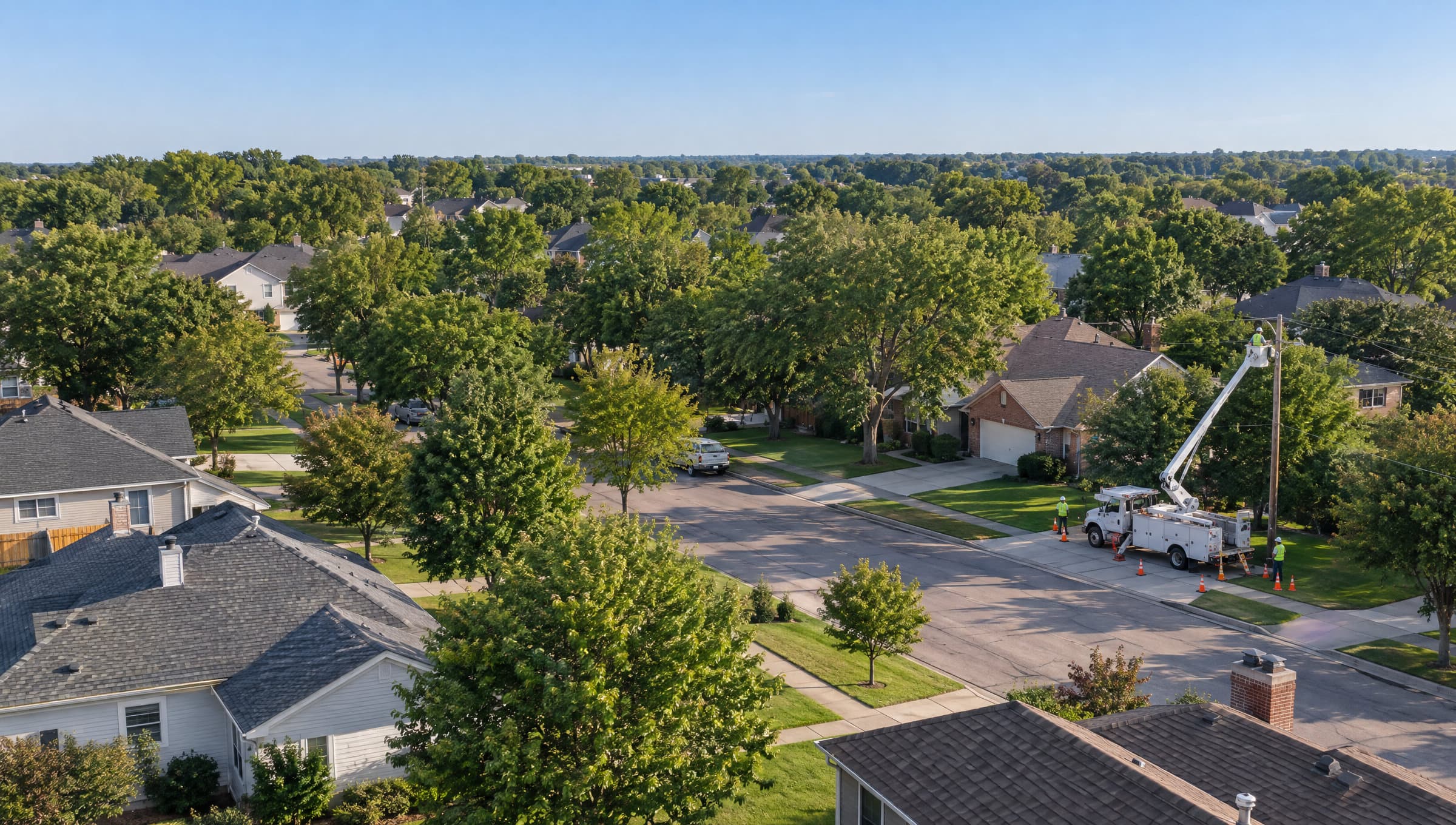

Metairie grew fast after World War II, and many of its sewer laterals date from that building boom. In Jefferson Parish the parish's job starts at your sewer cleanout near the sidewalk; the pipe between that cleanout and your house is yours. That makes knowing where your cleanout is the first step in any sewer repair here.
Find your cleanout first
Jefferson Parish says its responsibility begins at the 6-inch cleanout, usually near the sidewalk on the house side, and that residents should know where theirs is and keep it exposed (Jefferson Parish). The parish gives a simple test when drains back up:
- Open the cleanout cover. If there is no sewage in it, the blockage is most likely on your side of the line: call a plumber or sewer contractor.
- If sewage is standing in it or overflowing, the problem is likely between the cleanout and the main: call the parish Department of Sewerage.
The parish's Department of Engineering keeps records of house connections and can help locate a cleanout if you give your address and lot and square number.
Why Metairie laterals fail
About 39% of Metairie's homes were built between 1950 and 1969 (U.S. Census Bureau). Homes from that era often have their original laterals, some of them fiber Orangeburg pipe that flattens and lets roots in, others clay or cast iron that cracks at the joints. Mature trees along older streets add root intrusion to the list.
What Drives the Cost in Metairie
- Pipe material and how far it has failed
- Length from the cleanout to the house
- Driveways, slabs and landscaping over the line
Compare written quotes. See the cost guide.
Housing age: Most homes in Metairie were built after 1960: the median home dates from 1972, and about 39% were built between 1950 and 1969. Homes from those decades are the most likely to have original fiber, clay or cast iron laterals, so a camera inspection still decides the repair. (Source: U.S. Census Bureau, American Community Survey 2020–2024 5-year estimates, tables B25034 and B25035.)
Repair options for a Metairie lateral
- CIPP lining from the cleanout, when the pipe is cracked or rooted but still round.
- Pipe bursting between the cleanout and the house, when the pipe has flattened or broken.
- Spot repair for a single failed joint.
Because the parish cleanout sits at the front property line, many Metairie jobs can use it as the access point, which keeps digging to a minimum.
Questions to ask a Metairie contractor
- Did you inspect from my cleanout, and can I keep the video?
- What is my lateral made of, and does it need lining or replacing?
- Will you need a pit, and where?
- Which permit does the work need, and do you pull it?
Frequently asked questions
Is the sewer line under my front yard my responsibility?
In Jefferson Parish, the pipe from your house to the cleanout near the sidewalk is yours; from the cleanout on, it is the parish's. If you aren't sure where your cleanout is, the parish Department of Engineering can help locate it.
My drains back up but the cleanout is dry. What does that mean?
According to the parish, a dry cleanout usually means the blockage is on the private side, between the cleanout and the house. That is a job for a plumber or sewer contractor.
Which contractors serve Metairie?
The contractors listed above cover Metairie. Ask each for a camera inspection from your cleanout before a quote.