


Atlanta, GA · Contractor Directory
Atlanta trenchless sewer repair has become the preferred solution for homeowners battling red Georgia clay, an aggressive urban tree canopy, and aging cast iron infrastructure across the metro area. Whether you live in a 1920s Inman Park bungalow or a Buckhead mid-century home, no-dig methods restore your sewer line while protecting mature landscaping, hardscape, and driveways.
Find Your Atlanta Trenchless Contractor
Connect with pre-screened Atlanta specialists with proven experience in red-clay piedmont conditions. Compare bids, verify credentials, and read reviews from local homeowners across Fulton and DeKalb Counties.
Search Atlanta Contractors
This Atlanta trenchless sewer repair guide covers the city-specific challenges that drive pipe failure, the trenchless repair methods best suited to red-clay piedmont conditions, local permit requirements through Atlanta's Department of Watershed Management, and connects you with vetted Atlanta contractors who specialize in no-dig solutions.
Local Conditions
Atlanta's Unique Sewer Repair Challenges
Atlanta's position on the southern edge of the Piedmont Plateau creates a distinct combination of soil chemistry, climate, and vegetation that accelerates sewer line deterioration in ways most national contractors don't fully account for.
The famous red Georgia clay underlying nearly every Atlanta neighborhood is a high-plasticity, iron-oxide-rich soil with extreme expansion and contraction behavior. During the city's humid summers and after heavy rainfall, this clay swells and applies lateral pressure to buried pipes; during dry winter spells it shrinks and pulls away from joints, creating cyclic stress that fractures rigid pipe materials and pulls clay tile joints apart.
For homeowners, offset joint repair and cracked pipe fixing are the two most common service calls tied directly to red-clay soil movement throughout the metro area.
A large share of Atlanta's housing stock predates 1970, especially in Inman Park, Grant Park, Cabbagetown, Virginia-Highland, Druid Hills, and Ansley Park. These homes were typically plumbed with cast iron drain stacks and clay tile lateral lines — both of which are now well past their 50–75 year service life. Confirming material compatibility before any repair is critical, which is why every reputable Atlanta contractor begins with a pipe assessment and reviews cast iron pipe compatibility with the proposed repair method.
Atlanta's 70 percent average humidity and warm groundwater accelerate microbially induced corrosion (MIC) inside cast iron pipes, where bacterial activity converts sewage into sulfuric acid. The result is the pitted, channeled pipe interior that camera inspections frequently reveal in homes built between 1940 and 1970.
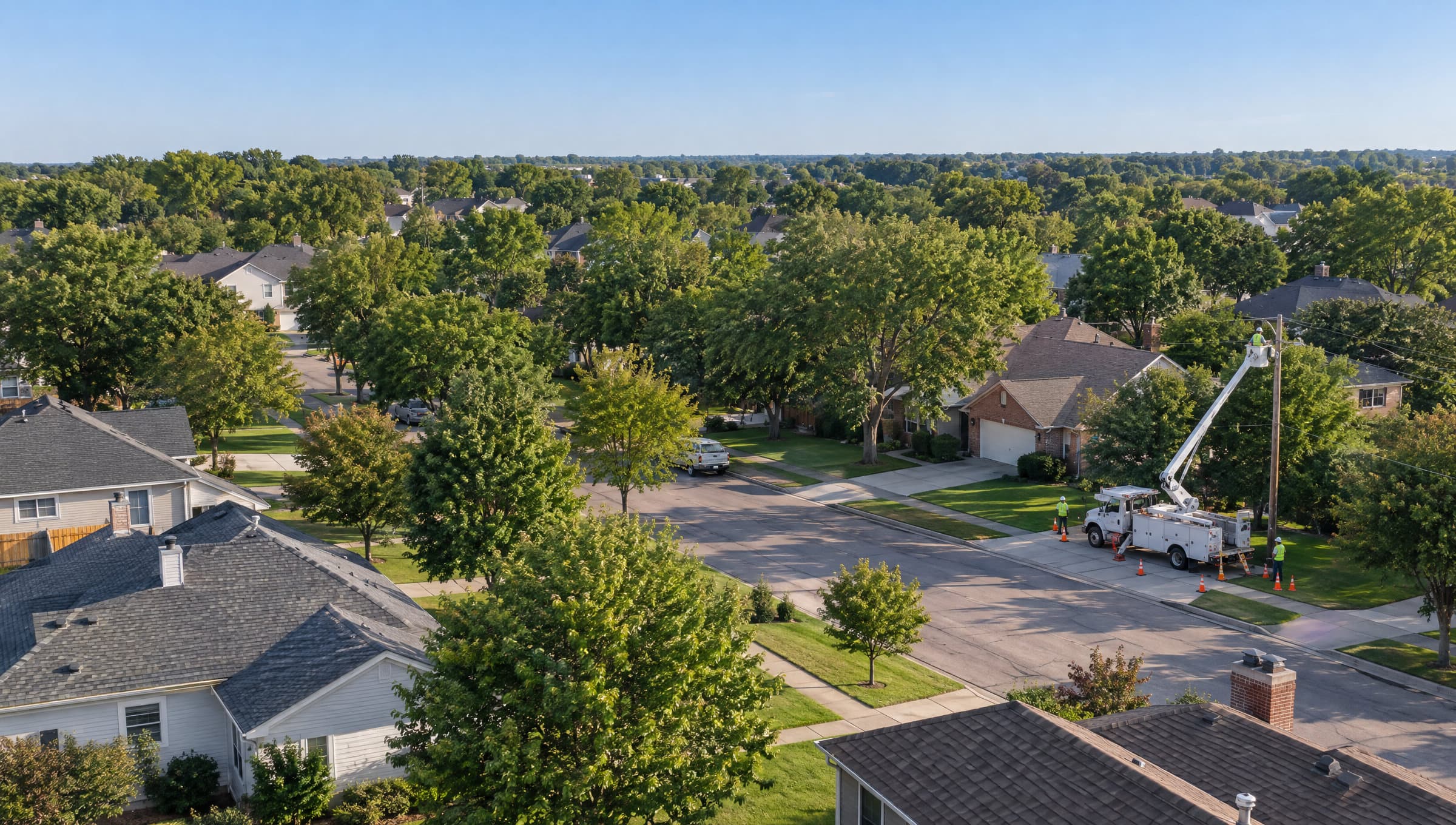
Atlanta has the largest urban tree canopy of any major U.S. city — roughly 47 percent coverage according to City of Atlanta urban forestry data. Water oak, willow oak, sweetgum, southern magnolia, and loblolly pine all develop aggressive root systems that actively seek the moisture and nutrients leaking from compromised sewer joints.
Once roots penetrate, they expand rapidly in Atlanta's long growing season, which is why mechanical clearing alone is a temporary fix. Permanent prevention requires sealing the entry points with a jointless liner — the focus of our tree root intrusion solutions guide.
Repair Methods
Best Trenchless Methods for Atlanta
CIPP Pipe Lining: Ideal for Atlanta's Soil and Trees
Cured-in-place pipe lining is the most-used Atlanta trenchless sewer repair method because it directly addresses the city's two biggest failure modes: red-clay joint movement and aggressive root intrusion. The process installs a resin-saturated felt liner inside the existing pipe, then cures it into a structural, jointless replacement — eliminating the gaps roots exploit.
Our trenchless methods guide covers the full process, while the epoxy resin systems guide details the resin chemistry approved for Atlanta-area sewer materials. CIPP works through existing access points, so mature live oaks and Bermuda lawns stay intact.
Pipe Bursting for Complete Line Replacement
When camera inspection reveals collapsed sections, severe root mass, or undersized 4" pipes that need upsizing to 6", pipe bursting is the right call. The bursting head fractures the old pipe outward into the surrounding clay while simultaneously pulling new HDPE pipe into place. Atlanta's clay actually helps here — it compacts cleanly around the new line, creating long-term stability.
UV-Cured Lining for Faster Cure Times
For commercial Atlanta projects or restaurants on tight downtime windows, UV-cured pipe lining offers a faster, more controlled cure than steam or ambient methods. UV systems are especially common on Midtown and Buckhead commercial work where lane closures must be minimized.
When Traditional Excavation Is Necessary
Trenchless covers about 85 percent of Atlanta sewer cases, but full excavation is still required for completely collapsed laterals with no remaining pipe wall, or when reconfiguring sewer routing for an addition. The trenchless vs traditional excavation cost comparison walks through how to weigh both options.
Coverage
Atlanta Neighborhoods We Serve
The contractor network covers all 242 official Atlanta neighborhoods plus the surrounding metro communities in Fulton and DeKalb Counties.
Inman Park, Grant Park, Cabbagetown, Old Fourth Ward, Reynoldstown, Kirkwood
Brookwood Hills, Tuxedo Park, Garden Hills, Buckhead Heights, Peachtree Heights
Ansley Park, Atlantic Station, Home Park, Sherwood Forest
Virginia-Highland, Morningside-Lenox Park, Druid Hills, Candler Park
East Atlanta Village, Edgewood, Decatur, East Lake, Oakhurst
West End, Vine City, Adair Park, Capitol View, Pittsburgh, Westview
Services
Trenchless Services Available in Atlanta
Sewer Repair
Full-service sewer line repair covering everything from spot repairs to complete replacement, sized to Atlanta's mix of historic and modern housing.
Pipe Lining (CIPP)
Cured-in-place pipe lining creates a seamless, jointless new pipe inside the failing host pipe — the gold standard for Atlanta's clay-soil movement and root intrusion problems.
Pipe Bursting
Trenchless full-line replacement for collapsed or undersized lines, pulling new HDPE pipe through the path of the old one with only two small access pits.
Drain Cleaning
Hydro-jetting and mechanical cleaning to clear roots, scale, and grease — often the diagnostic first step before a camera inspection in older Atlanta homes.
Sewer Camera Inspection
HD push and crawler cameras that record the exact location, depth, and severity of pipe defects — required documentation for most Atlanta permits.
Epoxy Pipe Coating
Brush-applied or spray-applied epoxy coatings that restore smaller-diameter drain and supply lines without lining a full structural sleeve.
Pricing
Cost of Trenchless Sewer Repair in Atlanta
Typical Atlanta pricing reflects local soil conditions, access complexity, and Fulton County permitting fees. Use these ranges as a starting point when requesting estimates.
- Sewer Camera Inspection $300 – $550
- CIPP Pipe Lining $95 – $280 per linear foot
- Pipe Bursting $75 – $230 per linear foot
- Spot / Point Repairs $1,500 – $4,500
- Hydro-Jetting & Root Removal $325 – $850
- Traditional Excavation $150 – $325 per linear foot
Several local variables push Atlanta pricing above or below the national median: red-clay excavation difficulty (when needed), depth of historic intown laterals (often 6–10 feet), Atlanta tree-protection ordinance setbacks for excavation near protected trees, distance from the cleanout to the city main, and whether the line crosses a hardscaped driveway or historic granite curb. When evaluating quotes, also consider the repair vs. replace decision — replacing once with a structural liner usually costs less than three rounds of mechanical clearing on a deteriorating cast iron line.
FAQ
Common Questions About Atlanta Sewer Repair
Most residential CIPP lining projects finish in a single day. Pipe bursting typically runs 1–2 days. Traditional excavation in Atlanta's red clay can stretch to 3–7 days depending on depth, hardscape, and tree-protection setbacks.
Yes — but in trenchless's favor. Because lining and bursting work inside the existing pipe trench, you avoid the worst of the clay excavation problem. Experienced Atlanta contractors also account for clay's long-term movement when sizing the liner thickness.
Yes. Mechanical root cutting is temporary — roots return within 6–12 months. Permanent prevention comes from sealing every joint with a CIPP liner, which keeps the tree itself completely undisturbed. See our root intrusion solutions for full detail.
Almost always, yes — any work that affects the lateral connection to the city main requires a Watershed Management permit. A licensed contractor pulls this for you and includes it in the bid.
The camera inspection tells you. Cracks, root intrusion, and offset joints generally suit CIPP. Full collapses or undersized lines suit bursting. Reconfigured routing or completely missing pipe suits excavation. The method selection criteria walks through the decision tree.
Trenchless methods preserve mature live oaks, magnolias, and Bermuda lawns — only two small access points are needed. Traditional excavation requires full trench restoration, which is much harder to recover in Atlanta's clay subsoil.